
We hold these truths to be self-evident, that all investment products are not created equal, that pensions are endowed by their superannuation balance with certain obvious benefits… (apologies, Tom, Ben and John)
Account based pensions, available since the 1990s and lifetime and deferred annuities from early 2010s, continue to service the requirements of an increasing number of retirees.
For those in the industry, the advantages of these products make them the obvious choice for members’ superannuation savings. At a recent ASFA event, a lot of attention was given to how we relay this message to the members of funds.
Arguably, we have developed a system centred around smart defaults to compensate for customer disengagement. This has been a major contributor to its success — investment decisions have been taken out of the hands of the average punter and left to the professionals. But it is also a source of weakness. Members ultimately do not know what to do when a default isn’t there to save them.
Commonly, too much of the rhetoric centres on questions like ”what does retirement look like?” and “how much is enough?”. Not enough attention is given to understanding where superannuation customers are in terms of their financial maturity. Our guess is that engagement is improving as the average superannuation balance grows and governance standards improve —largely driven by greater regulatory scrutiny.
We are kidding ourselves if we think it is a binary choice between more defaults or education and advice. More likely, trustees will need to build dynamic information platforms to support capability development for identifying what members need today and in the future as they progress along the maturity curve (or not).
The regulators’ retirement income covenant supports this. It obliges trustees to develop a strategy with focus on the following high-level themes:

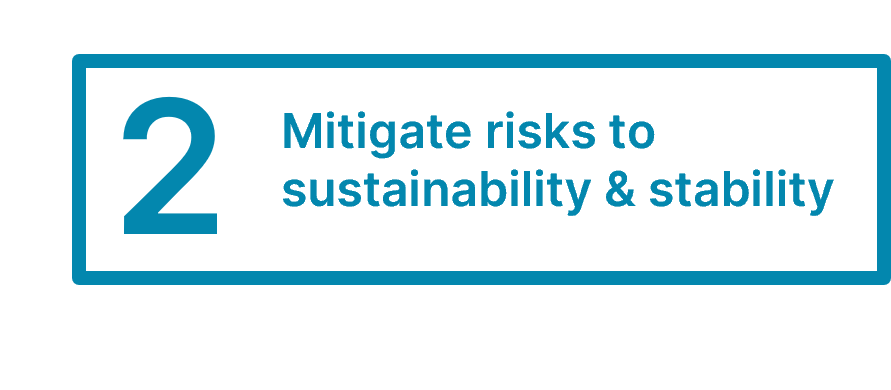
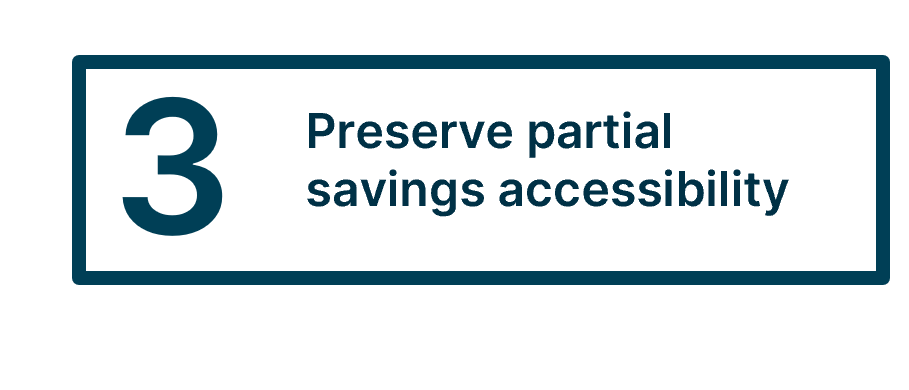
For the trustee, the next best action is to improve the information they have about their members to help them identify how best to approach their members on their terms. The following is a technical approach that a trustee could take to establishing the information:
-
- Attribute Mapping: Define quantifiable proxies for optimal retirement (e.g. balance thresholds, health indices, housing status).
-
- Data Infrastructure: Implement scalable data stores to monitor member cohorts across temporal and behavioural dimensions.
-
- Insight Translation: Develop segmentation algorithms and behavioural nudges aligned to identified gaps in member pathways.
-
- Channel Deployment: Construct multi-format advice delivery based on members preferred channel and cohort-specific needs.
This would provide trustees with a way to systematically transform regulatory principles into programmatic execution frameworks. The priority will be to develop and implement the skills and platform that can readily pivot to better service cohorts of members with some combination of defaults and advice.
There is complexity involved in implementing and maintaining these technical solutions. The design must consider collecting and preparing data, analysing it using various techniques, visualising findings, and finally, interpreting and communicating those insights to drive informed decisions.
To complement the trustee effort, the regulators and industry groups should consider a joint marketing campaign that includes:
-
- The obvious advantages (tax, flexibility, investment returns) of ABPs.
-
- Member stories complemented by dashboards showing projected pension flows and asset decay scenarios.
-
- The ethical pooling of longevity premiums as a redistributive mechanism: high-balance, low-risk members subsidising broader cohort volatility — potentially enabling a new layer of systemic resilience.
The structural efficiency of ABPs, coupled with covenant-driven accountability and emerging data capabilities, positions Australia’s retirement system for advanced modelling, increased transparency, and long-term sustainability.
Trustees now face a technical imperative: to translate qualitative objectives into quantitative execution across product, engagement, and equity domains. Success will depend on how precisely data, policy, and behaviour are synthesised into coherent member strategies.

Michael Quinn
This article was also strengthened by a wider group of Novigi specialists, whose withering years of toil and rich experience added depth and clarity to the perspectives shared.
For more information about anything you’ve read here, or if you have a more general inquiry, please contact us.