
The objective of superannuation is to preserve savings to deliver income for a dignified retirement, alongside government support, in an equitable and sustainable way.
Yet in amongst the day-to-day complexities of fund operations and administration, investments, regulation, transformation and change, it’s easy to lose sight of this objective — buried beneath layers of process, spend, and strategic trade-offs.
Every dollar spent — whether opex or capex — should be traced back to this objective. Not in vague, aspirational terms, but in SMART terms: Specific, Measurable, Achievable, Relevant, and Time-bound. This is particularly important when considering how and why money is spent on tech and data initiatives.
It’s time to bring back member centricity and reintroduce member first!
No doubt the “essence” of this objective is incorporated in countless board papers, fund strategies and business plans (SPS 515 anyone?). But the challenge for funds is to make this principle real — especially when faced with complex trade-offs in technology investment, product innovation, member servicing initiatives, and cost control.
A truly member-centric approach requires ruthless clarity. Funds need to be able to answer these questions with certainty:
-
- Why are we spending this dollar?
-
- How does it improve retirement outcomes for our members?
-
- Over what time horizon?
-
- Can we tangibly measure the impact?
Whether it’s implementing a new CRM, launching a retirement income tool, upgrading legacy systems, driving an AI strategy or expanding the advice offer — the litmus test is the same: does this investment help members retire better, in a way that is fair, sustainable, and data-driven?
The superannuation system does not exist to build digital capability for its own sake. It does not exist to run marketing campaigns, uplift fund brand, or even deliver top-quartile returns — unless these things contribute directly to the core purpose.
A change of mindset is required. Instead of asking, “How do we justify this spend?”
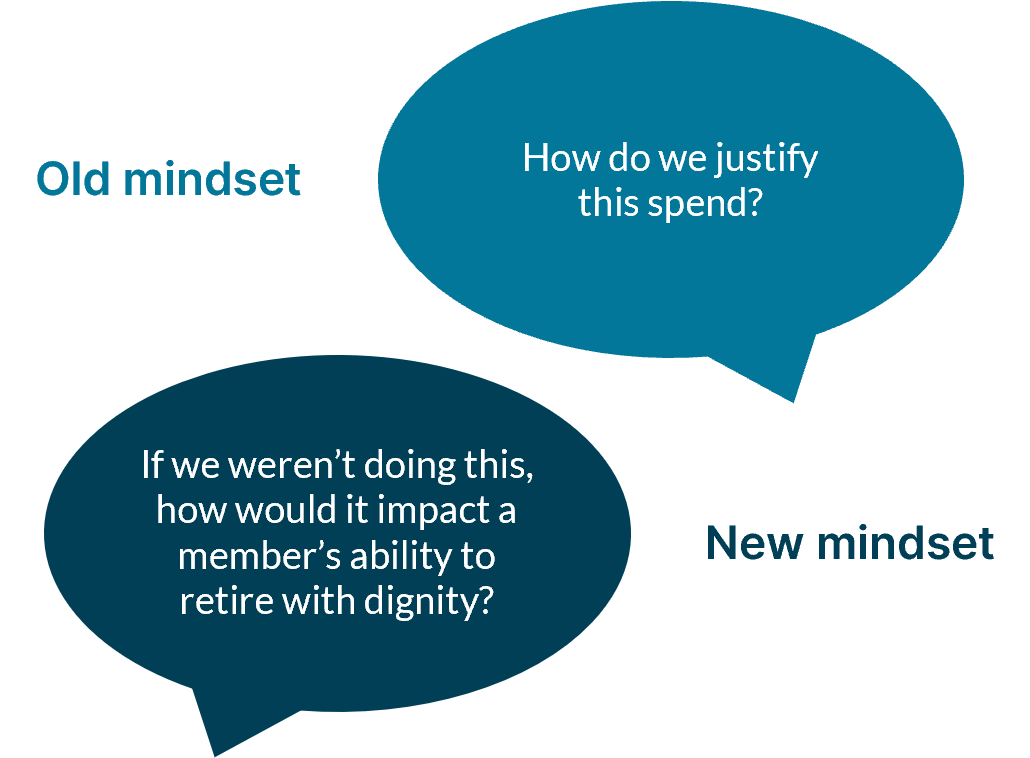
This mindset invites a more disciplined, impact-led approach to strategic planning — one where member outcomes become the driving principle, not an afterthought.
A SMART Way Forward
To operationalise this thinking, funds should consider implementing the SMART framework across planning, investment cases, and board reporting:
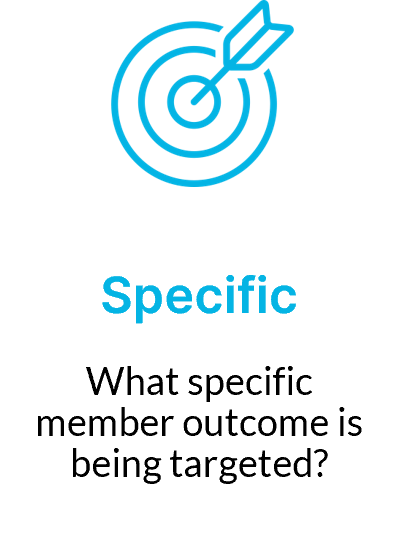
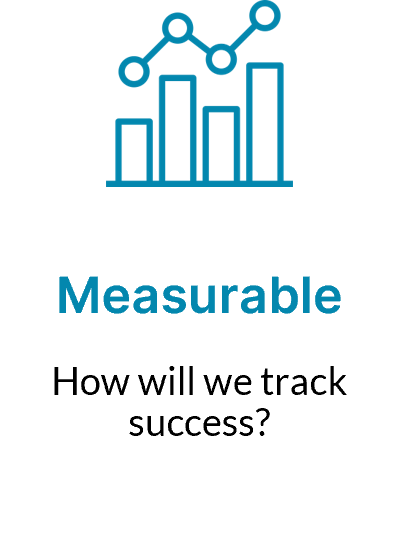
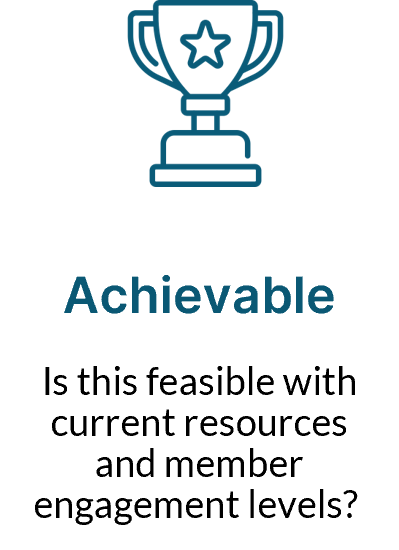

Applying this discipline ensures that the member objective isn’t just a vision statement — it’s a way of life for the super fund.
Reducing Fund Operational Costs through AI-Facilitated Solutions and Automation
To meet the superannuation objective, look for opportunities to reduce operational costs by automating high-volume, repetitive processes, while improving service (functional and non-functional) and response times across member engagement and lifecycle.
Here are a few examples of instance where SMART frameworks can be applied to increase the impact of dollars spent on data and tech initiatives.
Opportunity 1:
A natural language processing (NLP)-enabled virtual assistant deployed across the fund’s website and member portal. Integrated with the fund’s CRM and knowledge base, the chatbot could:
-
- Understand member intent in plain language.
-
- Automatically route complex queries to appropriate teams.
-
- Execute low-risk actions like sending pre-populated forms, checking balances, and updating contact details.
Outcome: Annual cost savings in call centre overhead.
Opportunity 2:
AI facilitated automation of high-volume transactions, either within the registry (if applicable) or via external process automation capabilities (such as RPA, or Robotic Process Automation):
-
- Look for admin functions that are labour intensive and/or prone to error (i.e., both resulting in increased service costs).
-
- Including validation of incoming admin processing data from asynchronous channels (e.g., validation of member-submitted forms against registry rules).
-
- Automate data quality checks prior to key batch runs and/or data submissions to external platforms (to minimise errors down the track requiring manual intervention).
Outcome: Annual savings in admin operational costs.
Opportunity 3:
AI facilitated predictive analytics for member retention:
-
- Train machine learning models on member behaviour (e.g. login activity, member contribution patterns, contact history across channels) to identify at-risk members.
-
- Use this to trigger proactive digital nudges (e.g. super consolidation prompt, update details prompt and so on), prioritised based on likelihood to engage.
Outcome: Uplift in member engagement in AI selected segment and projected cost savings through reduced disengagement and manual outbound admin follow-up.
Opportunity 4:
AI facilitated fraud prevention:
-
- Member account monitoring — train machine learning models on member transactions and interactions — including logins, transaction requests, and location/IP metadata.
- These models can then continuously evaluate for anomalies and risk signals, such as:
- Logins from new geographies or unusual devices.
- Withdrawals requested shortly after password resets.
- High frequency failed MFA attempts.
- Sudden changes to contact or bank account details.
- Correlation of security events and member transactions to identify unusual or risk patterns (including over lapsed time).
Outcome: Reduction in superannuation fraud and associated costs a fund would have otherwise incurred.
Summary
The is not just about surviving regulatory change or competing on digital experience. It’s about super funds recommitting to the fundamental purpose of the system and making decisions accordingly.
In practical terms, that means treating every dollar — opex or capex — as member’s money. And being able to show, clearly and credibly, how that spend helps real people retire with confidence, fairness, and dignity.
Because in the end, the question members (and regulators) will ask isn’t what did you build? It’s how did you help me retire better?

Sunil Dargani
Portfolio Lead, Delivery Goverannce
This article was also strengthened by a wider group of Novigi specialists, whose withering years of toil and rich experience added depth and clarity to the perspectives shared.
For more information about anything you’ve read here, or if you have a more general inquiry, please contact us.