
Back in 2021, we wrote about Regulatory Guide 271 (RG271), ASIC’s regulatory guide on internal dispute resolution (IDR). This article continues to be one of our most read pieces to date. This indicates two things:
- IDR is still a problem with which industry is grappling.
- Those who are seeking information about IDR recognise that technology is at the heart of the solution to this problem.
Our 2021 article outlined three strategic actions that firms should implement to comply with the standards of RG 271. They are:
- Make cultural and organisational changes.
- Update or implement complaints management systems.
- Improve complaints analytics.
Mind the gap!
It’s clear that there is still a gap between expectations and reality when it comes to complaint resolution timelines. AFCA’s Annual Review for 2022-2023 superannuation complaints (see Figure 1) highlights the response-time trend since 2018. Overall, there are more complaints, and they’re taking longer to resolve – 102 days, on average. Considering the timelines defined by RG 271, as shown in Figure 2, this 102-day average is, quite simply, not good enough.
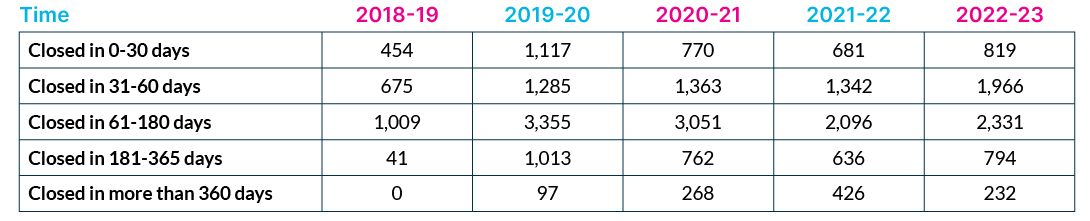
Figure 1: Time taken to close superannuation complaints. Source: AFCA

Figure 2: New maximum IDR timeframes. Source: AFCA
Complaints statistics (see Figure 3) from the first half of FY24 were released by AFCA in June. Despite pressure to reduce the total number of complaints, the numbers appear to be moving in the opposite direction.
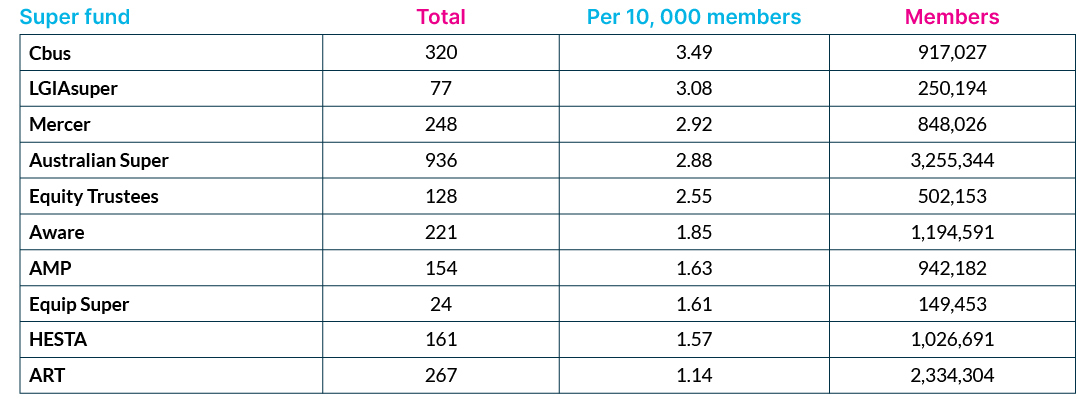
Figure 3: Customer complaints at big super funds, H1YF24. Source: AFR
It appears likely that the super industry as a whole will surpass last year’s records. Funds are thus trying to figure out how to improve their complaints management processes and timelines, while also having to contend with record numbers of complaints.
It’s interesting to reflect on the state of complaints three years after implementation of RG 271. The systems, the data within those systems, and the analytics conducted using that data are areas where the greatest uplift needs to take place. We strongly believe that improvement on these fronts will help superannuation and wealth management firms tame complaint numbers and resolution timeframes.
Complaints management systems and data quality
At this point in the RG 271 journey, all large superfunds have complaints management systems in place. That’s one hurdle conquered. The next one is ensuring data quality within this system which, in our experience, is one of the most common tripping hazards for wealth management organisations. It’s important to get this right, as it sits at the very heart of IDR’s raison d’être – to record, improve and standardise the quality of dispute resolution data.
To do this, organisations must ensure their systems and data are interoperable. If you’re an avid reader of the Quarterly, you’ll know that this is an intrinsic part of Novigi’s approach to data and technology – in fact, our CEO has written a couple of articles on the matter. The analogy of a silo is often used to describe “old school” approaches to data, such as ye ol’ faithful Excel data spreadsheet. The reason we harp on about interoperability is because it’s impossible to get any of this right when critical data collection points within an organisation are not speaking to one another. That’s how we end up with ever increasing levels of complaints relating to administrative errors and, consequently, service quality (see Figure 4).

Figure 4: Top 5 superannuation complaints received by issue. Source: AFCA
The reality is that some organisations simply do not have the inhouse capability or capacity to effectively manage systems and data quality. This is where partnerships with trusted, experienced service providers are critical. Likewise, adopting the right tooling to minimise siloing and maximise data quality ensures that organisations can maintain operational efficiency, make informed decisions, and stay competitive in an increasingly data-driven world.
Complaints analytics
This is where the value of RG 271 comes into play. Not only did it raise awareness about complaints, but it raised the bar for how we document and action complaints. Indeed, there’s a whole section in the regulatory guide which unpacks the continuous improvement tasks organisations must undertake (see Figure 5 below for headline areas for continuous improvement).
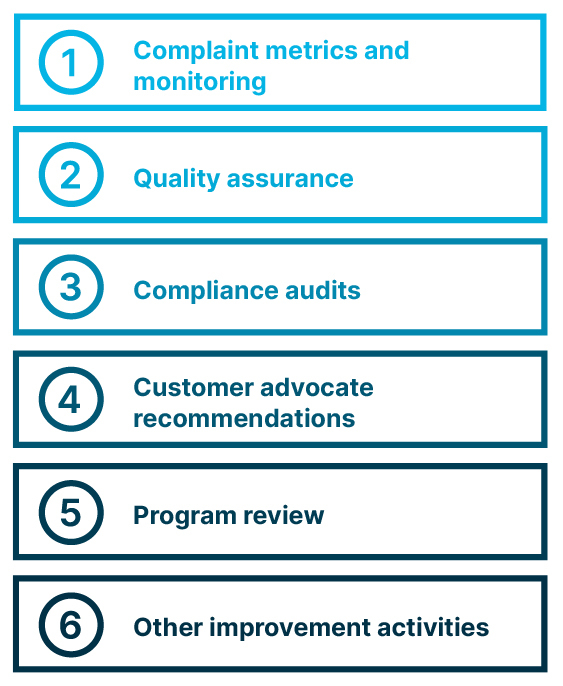
Figure 5: RG 271 Continuous improvement tasks. Source: ASIC (pg 48-49)
While complaints are something that every organisation wants to minimise, there is a lot that can be learned from them. There is merit in adopting a “silver lining” mindset to complaints. Consider all the things that can be learnt about customers from the dataset created for RG 271. Research conducted by ASIC in 2022 found that:
- 6/10 trustees “could explain the process used to analyse complaint data to identify possible systemic issues”.
- 5/10 trustees could not describe how they used information from complaints to improve the experience of members generally.
Somewhere between “listening to learn” from customers and harnessing analytics to drive positive process changes, your business will close the gap between reality and expectations of RG 271. Thankfully, there are tools and approaches that can be adopted to make this learning experience easier. We see several excellent use cases for new technological solutions to help solve this problem. For example:
- Data mining and analytics, to understand customer behaviour
- Predictive analytics, to identify those who are likely to move funds
- AI, to enable much of the above
- Voice analytics – sentiment and tone analysis can be conducted. AI can provide prompts to the customer service representatives to engage with customers in a more nuanced way, according to their emotional state.
- Asynchronous messaging – chats stay live. No need for direct, live connection.
Over the last three years, these technologies have increased in their efficacy and efficiency, as well as reduced costs and increased availability for implementation. At this point in the RG 271 lifecycle, these tools are essential for closing the gap between reality and expectation for customer complaints management.
Breaking the cycle
Breaking the cycle of inadequate complaints management is challenging – especially considering all the other focus areas wealth management organisations are currently grappling with. However, effective complaints management is not just about tracking data; it’s about using that data to drive actionable insights. By leveraging task-appropriate tooling or partnering with experienced firms, organisations can transform their complaints data into strategic assets. Enabling your organisation to identify systemic and recurring issues, streamline resolution processes and ultimately improve customer satisfaction is what it’s all about.
This article was produced as part of The Quarterly – Data and Technology in Superannuation, Q4 FY24
For more information about anything you’ve read here, or if you have a more general inquiry, please contact us.
Key Contributors:

Kevin Fernandez is General Manager, Market Strategy and Propositions at Novigi, and is based in the Melbourne office.

Sophie Bowen-James is an analyst in the Market Strategy and Propositions team at Novigi, and is based in the Sydney office.